

Program · 08 Jul 2026
Master of Engineering Science at Western University
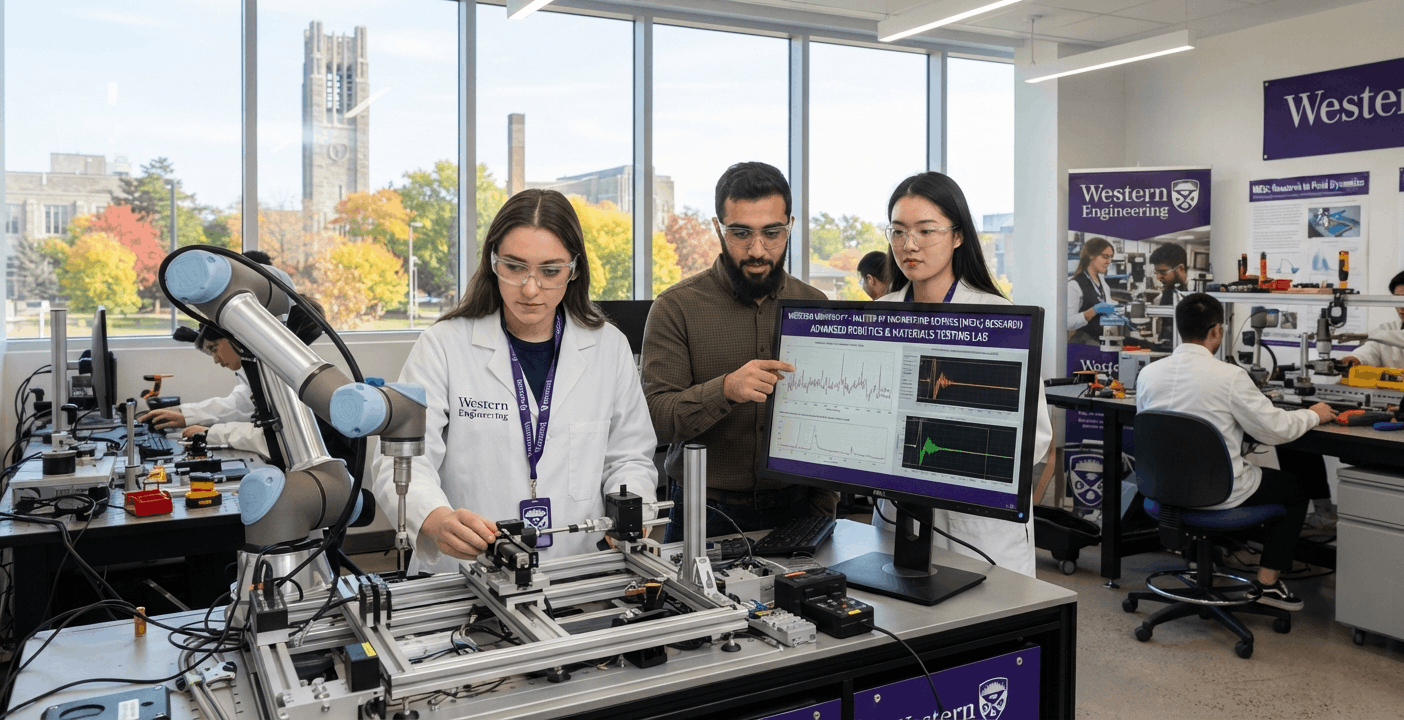
The Master of Engineering Science at Western University is a two-year, full-time, thesis-based programme designed for s...
Read More
Free consultation — no commitment required.
Skilled overseas education experts helping you secure top programs and future opportunities.

Admission Rate
98%
Across all destinations
Avg. Cost Savings
₹20L*
vs. self-managed admissions
300+
Partner Universities
50+
Destinations Covered
98%
Admission Rate
₹20L*
Avg. Cost Savings
*vs. self-managed admissions
Quick facts, outcomes, and career advantages.
Study Masters in canada
Explore world-class cities offering exceptional graduate programs
Program · 08 Jul 2026
The Master of Engineering Science at Western University is a two-year, full-time, thesis-based programme designed for s...
Read More
Masters · 02 Jul 2026
Master of Information Science at University of Montreal is a specialized graduate program designed for students interes...
Read MoreGain skills through programs aligned with industry demands.
Follow these simple steps to start your study abroad journey
Choose the best universities and programs based on your goals.
Prepare and complete required standardized tests.
Submit your application to selected universities.
Complete visa process and prepare for departure.
Everything you need to know before you begin your study abroad journey
Yes, a 3-year bachelor’s degree is accepted by several Canadian universities, but not all. Institutions like the University of Toronto or UBC typically prefer a 4-year degree, while others—such as York University, University of Windsor, or some colleges—may accept a 3-year Indian degree if it is paired with strong academic performance or additional certifications.
In some cases, students may be required to complete a postgraduate diploma or a bridge program before entering a full master’s program. Another option is applying to universities that explicitly mention acceptance of 3-year degrees in their eligibility criteria.
Yes, many universities in Canada do not require GRE or GMAT scores, especially for non-MBA programs. Over the past few years, universities have shifted towards a more holistic admission process.
However, submitting these scores can strengthen your application, particularly for top-tier universities or competitive courses.
Canada primarily offers three intakes:
The Fall intake is preferred because it aligns with internship cycles, job hiring seasons, and scholarship availability.
Most master’s programs in Canada are designed to be completed within 1 to 2 years.
Some universities also offer accelerated programs that can be completed in under a year, depending on course structure and workload.
Work experience is not mandatory for most MS programs in Canada, especially in technical or academic fields like Computer Science or Engineering.
Even when not required, having relevant work experience or internships can significantly strengthen your application and improve admission chances.
Yes, international students in Canada can work up to 20 hours per week during academic sessions and full-time during scheduled breaks.
Recent policy updates have occasionally allowed extended work hours, but students should always check current regulations before relying on them.
Common student jobs include roles in retail, hospitality, and campus services.
To obtain a Canadian study permit, students must demonstrate sufficient financial capacity.
Clear financial documentation is crucial for visa approval.
Yes, Canada is considered one of the safest countries for international students, including those from India.
Universities also provide dedicated support services such as campus security, mental health support, and international student offices.
However, students should still follow basic safety practices, especially in large cities.
Canada offers one of the most structured pathways to Permanent Residency for international students.
While PR is not guaranteed, Canada provides a clear and achievable pathway compared to many other countries.
The best city depends on your priorities—cost, job opportunities, or lifestyle.
Choosing the right city can significantly impact your overall study experience and expenses.
Yes, students can switch their course or institution after arriving in Canada, but there are conditions.
Frequent or unjustified changes may raise concerns during visa extensions or PR applications, so decisions should be made carefully.
Quick Overview:
A Masters in Canada is a popular choice for international students, offering globally recognised qualifications, research-driven education, and excellent career opportunities across fields such as engineering, business, computer science, healthcare, and data science.
Most masters programmes are completed in 1 to 2 years, with annual tuition fees ranging from CAD 8,000–88,000 (Approx. INR 5.5 lakh–60.4 lakh), depending on the university, programme, and province.
Students benefit from studying at globally ranked universities, gaining hands-on research and industry experience, and becoming eligible for a Post-Graduation Work Permit (PGWP), which can support long-term career and immigration goals.
This guide covers Canada's top universities, popular masters specialisations, admission requirements, tuition fees, scholarships, student visa process, living costs, and career opportunities after graduation.
| Key Highlights | Details |
|---|---|
| Top Universities | McGill University, University of Toronto, UBC, University of Waterloo, University of Alberta |
| Course Duration | 1 to 2 years postgraduate |
| Popular Fields | Data Science, AI, Civil Engineering, Public Health, Architecture |
| QS World University Rankings 2027 | #30 (McGill, Canada's highest-ranked university) |
| Tuition Fees | CAD 8,000-88,000/year (INR 5.5L-60.4L/year) |
| Living Expenses | CAD 12,000-19,200/year (INR 8.2L-13.2L/year) |
| Total Annual Cost | CAD 21,050-113,300/year (INR 14.4L-77.7L/year) |
| Post-Study Work Option | Post-Graduation Work Permit (PGWP), up to 3 years |
| Language of Instruction | English (French option at select Quebec universities) |
Choosing the right university is one of the most important decisions when planning a Masters in Canada. The country is home to several globally ranked institutions that welcome thousands of international students each year, offering everything from research-intensive degrees to career-focused and specialised master's programmes.
While rankings are helpful, the best university is the one that aligns with your academic interests, career goals, and the opportunities you want after graduation.
Best Universities in Canada for Masters:
| University | QS World University Rankings 2027 | Approximate Annual Masters Tuition Fee (CAD/INR) |
|---|---|---|
| McGill University | #30 | CAD 13,000-45,000 (INR 8.9L- 30.9L) |
| University of Toronto | #32 | CAD 16,000-70,060 (INR 11.0L- 48.1L) |
| University of British Columbia (UBC) | #45 | CAD 18,000- 58,000 (INR 12.3L-39.8L) |
| University of Alberta | #96 | CAD 9,000-58,224 (INR 6.2L- 39.9L) |
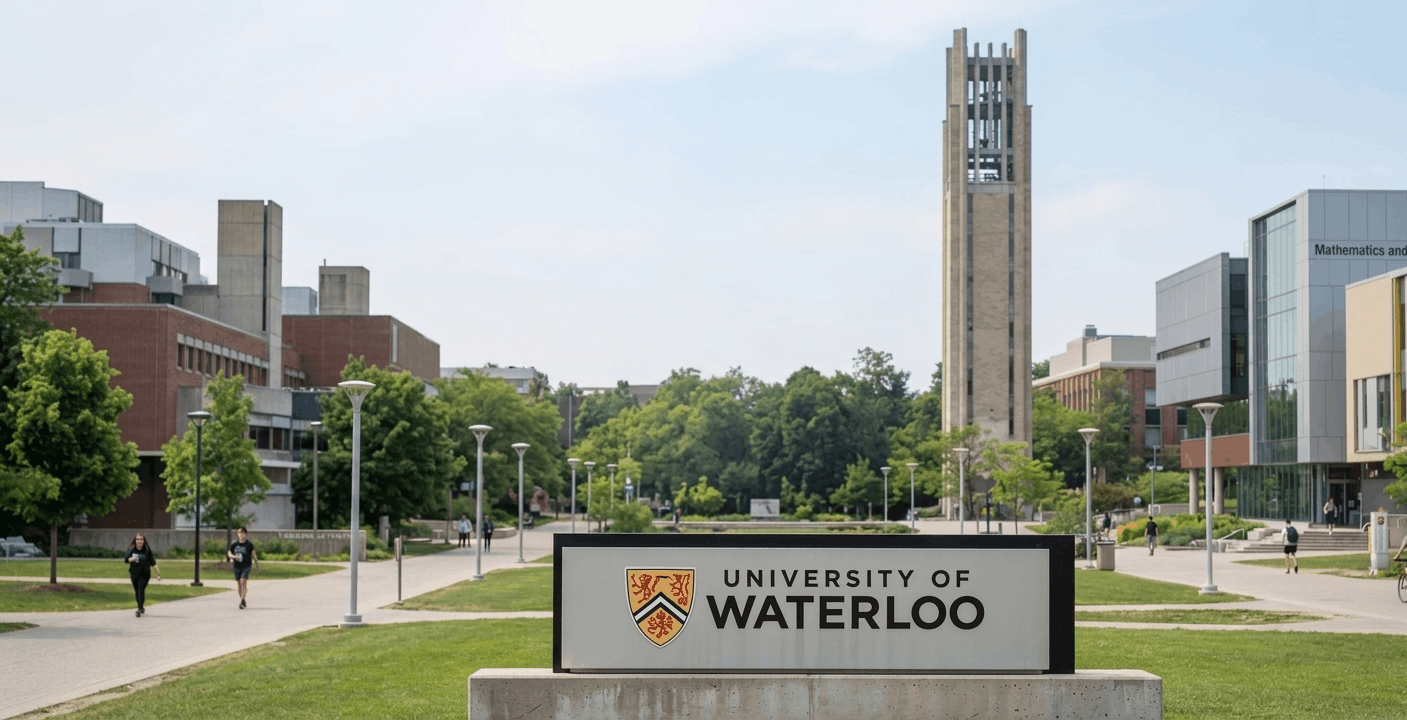
| University of Waterloo | #113 | CAD 16,000-49,716 (INR 11.0L- 34.1L) |
| Western University | #142 | CAD 18,000-45,000 (INR 12.3L- 30.9L) |
| Université de Montréal | #162 | CAD 15,000-40,000 (INR 10.3L- 27.4L) |
| McMaster University | #174 | CAD 15,000-42,000 (INR 10.3L- 28.8L) |
| Queen's University | #179 | CAD 18,000-45,000 (INR 12.3L- 30.9L) |
| University of Ottawa | #228 | CAD 8,568-68,000 (INR 5.9L- 46.7L) |
One of the reasons students choose a Masters in Canada is the sheer range of programs available. Whether you see yourself working in engineering, business, computer science, public health, or architecture, you'll find courses designed to match current industry needs and future career opportunities.
Below are some of the most popular Masters in Canada courses and the careers they can lead to.
A Master of Architecture (M.Arch) in Canada is typically a 2-3 year professional programme offered by top universities like UBC, Toronto, McGill, and Waterloo, combining advanced design studios with pathways toward professional licensure. Tuition for international students ranges from CAD 18,000-45,000 per year (INR 12.3L- 30.9L).
Popular specialisations:
A Masters in Civil Engineering in Canada prepares graduates for careers in infrastructure, construction management, and environmental engineering, with strong research links to Canada's transportation and public works sectors.
Popular specialisations:
As Canadian employers increasingly rely on data-driven decision-making, a Masters in Data Science in Canada has become one of the fastest-growing postgraduate options, with programmes like the University of Calgary's course-based Professional Graduate Program running a genuine 12-month, internship-integrated format.
Popular specialisations:
A Masters in Public Health (MPH) in Canada prepares students to address healthcare systems and population health challenges through research, policy, and community-based practice. UBC's School of Population and Public Health charges an official total programme fee of CAD 43,101.72 for international students.
Popular specialisations:
A Masters in AI in Canada benefits from the country's genuinely strong research ecosystem, including the Vector Institute in Toronto, Mila in Montreal, and Amii in Edmonton, three of the world's most recognised AI research hubs. Tuition ranges from CAD 8,000-88,000 depending on the university and residency status.
Popular specialisations:
Getting admission to a Masters Degree in Canada involves more than meeting minimum academic requirements. Universities evaluate your academic performance, English proficiency, supporting documents, and, in some cases, portfolio or research experience.
| Requirement | Details |
|---|---|
| Bachelor's Degree | A recognised four-year bachelor's degree from an accredited institution |
| Minimum GPA | Around 75% or B+ average (varies by university and programme) |
| Relevant Academic Background | Preferred for Engineering, Data Science, AI, and Public Health |
| Academic Transcripts | Official transcripts from all previously attended institutions |
| Test | Commonly Required For |
|---|---|
| GRE | Rarely required for architecture, engineering, or public health; occasionally requested for competitive AI and data science programmes |
| GMAT | Occasionally required for business- adjacent analytics programmes |
| Test Waivers | Widely available for candidates with strong academic or professional profiles |
| English Test | Typical Score Range |
|---|---|
| IELTS Academic | 6.5-7.5 |
| TOEFL iBT | 80-100+ |
| PTE Academic | 59-65 |
| Duolingo English Test | 110-125 |
| Programme Type | What Universities Typically Look For |
|---|---|
| STEM Programmes (Data Science, AI, Engineering) | Internships, coding projects, research work, technical portfolios |
| Architecture | A strong design portfolio alongside academic transcripts |
| Public Health | Relevant research, volunteer, or clinical exposure valued alongside academics |
| Document | Purpose |
|---|---|
| Statement of Purpose (SOP) | Explains academic background, career goals, and programme fit |
| Letters of Recommendation (LORs) | Usually 2-3 references from professors, employers, or supervisors |
| Resume/CV | Highlights education, internships, projects, and technical skills |
| Financial Documents | Bank statements or proof of funds required for admission and visa processing |
The application process for a Masters in Canada becomes considerably easier when you know what to do at each stage, from choosing the right course to preparing test scores, documents, and visa steps.
Most Canadian universities offer multiple admission cycles each year, giving students flexibility depending on when they're academically and financially ready to apply.
| Intake | Classes Begin | Key Highlights |
|---|---|---|
| Fall Intake | September | The most popular intake, with the widest programme selection, scholarships, and assistantship opportunities |
| Winter Intake | January | A solid alternative for students needing extra preparation time, though with fewer programme options |
| Spring Intake | May | Available at selected universities for limited programmes |
The cost of a Masters in Canada depends on the university, course, and city. Tuition is generally higher at research-intensive programmes like MBAN or MEng, while course- based research Masters Degree in Canada are often considerably more affordable due to assistantship funding.
| University Type | Approx. Annual Tuition (CAD) | Approx. Cost (INR) |
|---|---|---|
| Public/Research- Funded Programmes | CAD 8,000- 20,000 | INR 5.5L-13.7L |
| Mid-Tier Professional Programmes | CAD 20,000- 45,000 | INR 13.7L- 30.9L |
| Top-Tier/Specialised Programmes | CAD 45,000- 88,000 | INR 30.9L- 60.4L |
The cost of living for Masters in Canada depends largely on the city and lifestyle. Major cities such as Toronto and Vancouver are generally more expensive, while destinations like Waterloo, Ottawa, and Calgary offer comparatively lower living costs, making them popular choices for international students pursuing a Masters in Canada.
| Expense Category | Estimated Monthly Cost (CAD) | Approx. Cost (INR) |
|---|---|---|
| Accommodation | CAD 800-1,600 | INR 54.9K- 1.10L |
| Food and Groceries | CAD 300-500 | INR 20.6K- 34.3K |
| Transportation | CAD 100-150 | INR 6.9K-10.3K |
| Health Insurance | CAD 50-75 | INR 3.4K-5.1K |
| Personal and Leisure | CAD 100-200 | INR 6.9K-13.7K |
Taking tuition and living expenses together, the total annual cost of a Masters in Canada generally ranges between CAD 21,050 and CAD 113,300 (approximately INR 14.4L-77.7L), depending on the university, city, and programme chosen.
Studying in Canada can be a significant investment, but scholarships can meaningfully reduce that cost. From university-specific merit awards to federal and provincial funding, international students have access to genuine financial support.
| Scholarship | Eligibility | Coverage |
|---|---|---|
| Vanier Canada Graduate Scholarship | Doctoral-track students with exceptional academic achievement (some Masters-to-PhD pathways eligible) | CAD 50,000/year (approx. ₹31 lakh/year) |
| Ontario Graduate Scholarship (OGS) | Students enrolled at eligible Ontario universities, including Toronto and McMaster | CAD 10,000– 15,000/year (approx. ₹6.2 lakh–₹9.3 lakh/year) |
| Vector Scholarship in Artificial Intelligence | Students in Vector- recognised Masters AI programmes in Ontario | CAD 17,500 (approx. ₹10.9 lakh), merit-based |
| Isabel Loucks Foster Memorial Scholarship | MPH students at eligible Canadian universities | Amount varies by year |
| University-Specific Entrance Scholarships | Automatic consideration at admission for most institutions | CAD 1,000–5,000 (approx. ₹62,000–₹3.1 lakh) |
A Masters in Canada can build genuine careers in engineering, data science, healthcare, and architecture, with the Post-Graduation Work Permit giving graduates up to three years to establish themselves in the Canadian job market.
Here are top job roles along with approximate salary ranges for Masters Degree in Canada in 2026:
| Job Role | Approx. Annual Salary (CAD) | Approx. Annual Salary (INR) |
|---|---|---|
| Data Scientist (Calgary) | CAD 101,401 | INR 69.6L |
| Software Engineer (Waterloo) | CAD 83,441- 149,041 | INR 57.2L- 102.2L |
| Electrical Engineer (Vancouver) | CAD 56,519- 94,248 | INR 38.7L- 64.6L |
| Business Analyst (Toronto) | CAD 65,075- 95,392 | INR 44.6L- 65.4L |
| HR Manager (Toronto) | CAD 81,165- 124,701 | INR 55.7L- 85.5L |
| Investment Analyst (Montreal) | CAD 53,128- 101,649 | INR 36.4L- 69.7L |
Source: Glassdoor
A Masters in Canada remains one of the more balanced investments for students who want globally recognised education, genuine research infrastructure, and a realistic path to post-study work through the PGWP. While tuition and living expenses can climb quickly at the top end, particularly for specialised AI, data science, or architecture programmes, the return on investment often comes through Canada's genuinely strong employer base and immigration-friendly policies.
The biggest advantage isn't necessarily studying at the highest-ranked university on the QS World University Rankings 2027. It's the flexibility Canada's education system offers: students can choose between research-heavy programmes with assistantship funding, like UBC's MASc, or fast, career-focused routes like Calgary's 12-month Data Science and Analytics programme.
That said, choosing the right university matters more than chasing the biggest name. A programme that aligns with your career goals, budget, and preferred city can often deliver better long-term value than simply picking the highest-ranked institution. If you plan your finances carefully, apply for scholarships early, and make the most of Canada's co-op and internship culture, a Masters in Canada can open genuine doors across engineering, data science, healthcare, and architecture.
The Fall Intake (September) is the most popular and offers the widest range of programmes, scholarships, and assistantship opportunities. Winter and Spring intakes are available at select universities but generally offer fewer course options.
Most Canadian universities expect a minimum GPA of around 75% or a B+ average, though this varies by programme and institution. Highly competitive programmes at Toronto, UBC, or McGill may expect higher academic standing, and a strong SOP or relevant research exposure can help offset a slightly lower GPA.
The best programme depends on your career goals and industry demand. Data Science, Artificial Intelligence, Civil Engineering, Public Health, and Architecture all offer strong employment prospects in Canada, backed by genuine research hubs like the Vector Institute, Mila, and Amii for AI specifically.
No, most Canadian universities have made the GRE optional or don't require it at all for architecture, engineering, or public health programmes. Some competitive AI and data science programmes may still request it, so it's worth confirming directly with your specific programme.
Yes. Graduates of eligible programmes can apply for a Post-Graduation Work Permit (PGWP), allowing up to three years of open work authorisation for programmes lasting two years or more. This also serves as a genuine pathway toward permanent residency through Express Entry.
Yes. International students with a valid study permit can generally work up to 24 hours per week off campus during academic sessions, and full-time during scheduled breaks, alongside unlimited on-campus work hours at several universities.
The cost depends heavily on the university, programme, and residency status. Tuition generally ranges from CAD 8,000-88,000 (approx. INR 5.5L-60.4L) per year, while living expenses add another CAD 12,000-19,200 (approx. INR 8.2L-13.2L) annually. Public, research-funded programmes tend to be considerably more affordable than professional or specialised master's degrees.
Leading choices include McGill University, University of Toronto, University of British Columbia, University of Waterloo, University of Alberta, and Western University, all holding strong positions in the QS World University Rankings 2027 and offering genuine research and industry connections.
Consider factors beyond rankings, programme curriculum, faculty expertise, tuition, scholarships, co-op or internship opportunities, and graduate employment outcomes. A college that aligns with your academic interests and career goals often provides better long-term value than chasing the highest-ranked name alone.