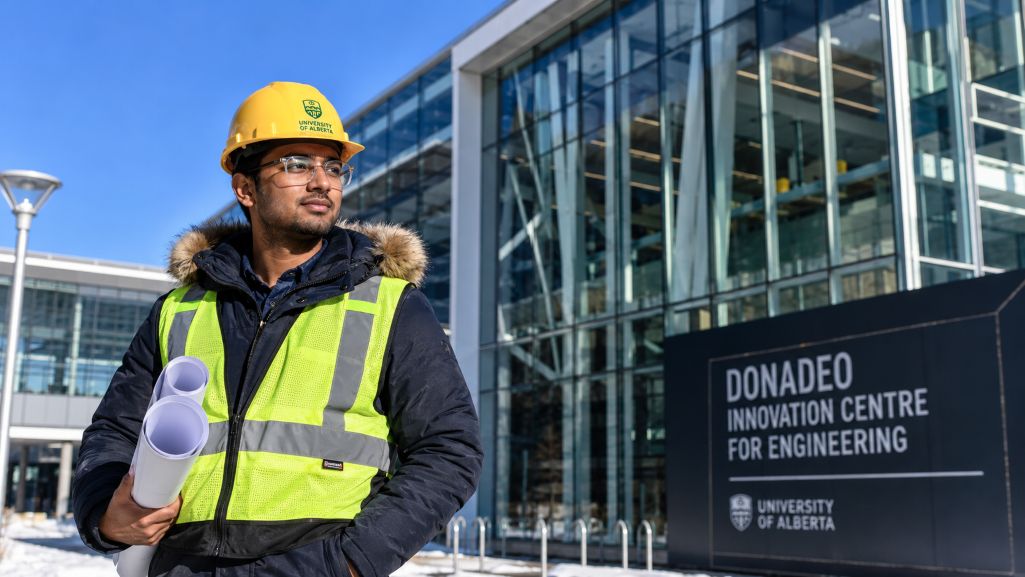
Master of Civil and Environmental Engineering at University of Alberta
Table of Contents
- Why choose Master of Civil and Environmental Engineering at University of Alberta?
- Specialization areas for Master of Civil and Environmental Engineering at University of Alberta
- Year-wise Curriculum for Master of Civil and Environmental Engineering at University of Alberta
- Eligibility Requirements for Master of Civil and Environmental Engineering at University of Alberta
- Master of Civil and Environmental Engineering at University of Alberta's Tuition Fees for Indian Students
- Tuition fees at different colleges
- Semester Date & Academic calendar for Master of Civil and Environmental Engineering at University of Alberta
- How to Apply for Master of Civil and Environmental Engineering at University of Alberta
- Career Opportunities After completing Master of Civil and Environmental Engineering at University of Alberta
- Cost of Living: Transportation, groceries, accommodation and other essentials
- Scholarships available for Indian Students in Alberta
- Conclusion
The University of Alberta offers a course-based Master of Engineering (MEng) and a thesis-based Master of Science (MSc) in Civil and Environmental Engineering. These programs advance technical skills in environmental science, structural, and water resources engineering. The MEng involves a minimum of 24 units and a capstone over 9 to 15 months.
Most importantly, the research-intensive MSc requires a thesis over 1 to 2 years. For international students in Fall 2026, the full-time yearly program fee is CAD 10,518.72 (INR 701,809).
Key Highlights Table:
Here is a quick overview of the essential program specifications.
Feature | Program Details | Specifications |
Program Names | MEng and MSc | Course-based or thesis-based options |
Program Duration | 9 months to 2 years | 9-15 months for MEng; 1-2 years for MSc |
Average Tuition | CAD 10,518 (INR 701,761) | Full-time yearly program fee for international students |
Application Fee | CAD 135 (INR 9,007) | Standard non-refundable processing charge |
Study Mode | Full-time | On-campus delivery in Edmonton |
Intakes Available | Fall and Winter | Primary entries in September and January |
Language Requirement | IELTS 6.5 or TOEFL 90 | Standard English proficiency benchmarks |
Why choose Master of Civil and Environmental Engineering at University of Alberta?
Choosing the University of Alberta for your civil engineering master's puts you at the forefront of global research and innovation. The institution boasts state-of-the-art facilities, supportive faculty, and deep ties with Canada's booming infrastructure sectors, giving you an unmatched career advantage.
Top Global Ranking: Consistently ranked among the top universities globally for engineering research and graduate employability.
Specialized Research Facilities: Access to world-class labs like the Nanofabrication Facility and large-scale structural testing labs.
Flexible Program Options: Choose between a swift 9-15 month MEng to quickly enter the workforce, or an in-depth 1-2 year MSc for research roles.
High Earning Potential: Graduates secure lucrative roles across Canada and globally, backed by an extensive engineering alumni network.
Post-Graduation Work Permit (PGWP): Completing this master's degree makes you eligible for a lucrative Canadian work permit to kickstart your international career.
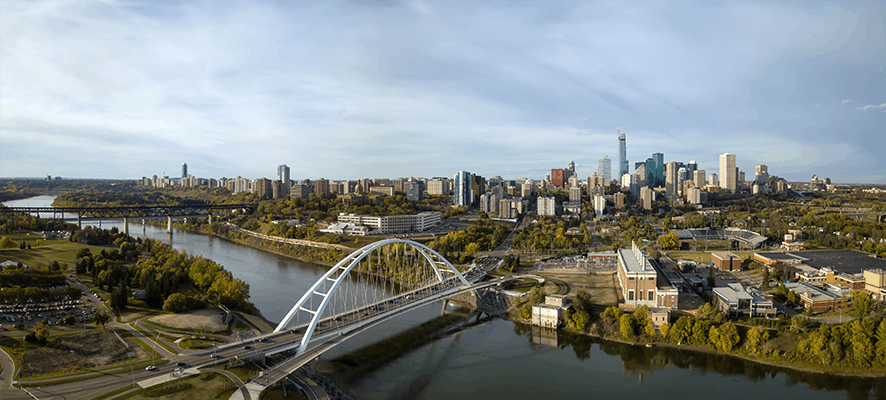
Affordable Living: Located in Edmonton, students enjoy a significantly lower cost of living compared to major Canadian hubs like Toronto or Vancouver.
Tailored Specializations: The faculty allows you to dive deep into niche sub-disciplines like mining, transportation, or structural mechanics.
Specialization areas for Master of Civil and Environmental Engineering at University of Alberta
While the program operates under a single main engineering faculty, the university features several highly specialized research groups and affiliated centers. These specific academic hubs allow you to intensely focus your studies on niche engineering disciplines alongside leading industry experts.
Students can focus their graduate studies across distinct disciplines including Structural, Environmental, Transportation, Geotechnical, and Water Resources Engineering which allows them to tailor their technical and leadership skills to specific industry needs.
This table highlights the primary research groups and centers under the civil engineering department.
Research Group / Center | Key Academic Focus | Target Career Path |
Environmental Engineering Group | Sustainable waste and water systems | Environmental Consultant |
Structural Engineering Group | Building mechanics and material strength | Lead Structural Engineer |
Water Resources Engineering Group | Hydraulics, hydrology, and fluid dynamics | Water Management Expert |
Transportation Engineering Group | Transit systems and traffic flow models | Transportation Planner |
Geotechnical Engineering Group | Soil mechanics and foundation design | Geotechnical Engineer |
Construction Engineering Group | Project management and cost estimation | Construction Manager |
Mining Engineering Center | Resource extraction and site safety | Mine Operations Manager |
Year-wise Curriculum for Master of Civil and Environmental Engineering at University of Alberta
The curriculum is dynamically tailored depending on whether you choose the MEng or MSc route. Students dive straight into core technical fundamentals during their first phase, followed by highly specialized electives, major research projects, or a final capstone to round out their expertise.
First Year / Core Foundations (MEng Track)
This phase focuses heavily on completing the required 24 units of rigorous foundational and elective coursework.
This table outlines the typical first-year structure and credit allocation for the course-based track.
Semester | Focus Area / Typical Subject | Credit Units |
Fall Semester | Advanced Structural Design | 3 to 6 Units |
Fall Semester | Engineering Hydrology Principles | 3 Units |
Winter Semester | Environmental Assessment Strategies | 3 to 6 Units |
Winter Semester | Sustainable Transportation Systems | 3 Units |
Winter Semester | Advanced Foundation Engineering | 3 Units |
Spring/Summer | Construction Management Tactics | 3 Units |
Spring/Summer | Final Capstone Project Work | 3 to 6 Units |
Second Year / Thesis & Research (MSc Track)
The second year shifts heavily toward independent laboratory research, thorough data collection, and defending your thesis.
This table explains the research timeline for students completing their intensive MSc thesis.
Semester | Focus Area | Specific Activity |
Fall Semester | Advanced Research Methods | Refining literature review methodologies |
Fall Semester | Data Collection & Lab Testing | Active physical or computational research |
Winter Semester | Thesis Data Analysis | Structuring results and forming conclusions |
Winter Semester | Specialized Elective Course | Finalizing any remaining elective requirements |
Winter Semester | Thesis Writing & Review | Drafting the formal research paper |
Spring/Summer | Peer Review & Revision | Incorporating supervisor feedback |
Spring/Summer | Final Thesis Defense | Presenting findings to the academic panel |
Eligibility Requirements for Master of Civil and Environmental Engineering at University of Alberta
Securing admission into this competitive engineering program requires a solid academic background and clear language proficiency. The admissions committee carefully reviews your past bachelor's performance, academic references, and relevant professional experience to ensure you are ready for advanced technical coursework.
This table lists the exact academic and language requirements for international applicants.
Requirement Category | Minimum Standard | Important Detail |
Bachelor's Degree | 3.0 GPA on 4.0 scale | Must be in a related civil/environmental engineering field |
IELTS Academic | 6.5 Overall | No individual band lower than 6.0 |
TOEFL iBT | 90 Overall | Minimum score of 21 in each individual section |
PTE Academic | 61 Overall | Acceptable alternative to IELTS or TOEFL |
Letters of Recommendation | Three Academic Letters | Submitted directly by your former professors |
Statement of Purpose | 1-2 Pages | Must highlight your engineering research goals |
Professional Resume | Updated CV | Should include internships and major projects |
Master of Civil and Environmental Engineering at University of Alberta's Tuition Fees for Indian Students
Understanding the official tuition structure helps international applicants budget properly without facing unexpected financial strain. The university has implemented a guaranteed tuition model, ensuring your base instructional fees remain consistent and predictable throughout the duration of your master's program.
This table breaks down the verified annual instructional and ancillary fees for international engineering students.
Fee Component | Cost in CAD | Cost in INR (Approx.) |
Yearly Program Tuition | CAD 10,518 | INR 701,761 |
Spring/Summer Additional Course | CAD 2,479 | INR 165,399 |
Standard Application Fee | CAD 135 | INR 9,007 |
Student Union & Athletics Fees | CAD 400 | INR 26,688 |
Health & Dental Insurance | CAD 450 | INR 30,024 |
U-Pass (Transit Arc Card) | CAD 360 | INR 24,019 |
Instructional Support Fees | CAD 850 | INR 56,712 |
Tuition fees at different colleges
Comparing Alberta's fees with other top Canadian institutions highlights its overall affordability and value. While universities in Toronto or Vancouver might charge significantly more, the University of Alberta offers world-class engineering education at a highly competitive rate, drastically easing the financial burden.
This table compares the estimated annual engineering master's tuition across various top Canadian universities.
University Name | Annual Tuition (CAD) | Annual Tuition (INR) |
University of Alberta | CAD 10,518 | INR 701,761 |
University of Toronto | CAD 30,000+ | INR 2,001,600+ |
McGill University | CAD 29,780 | INR 1,986,922 |
University of British Columbia | CAD 23,000+ | INR 1,534,560+ |
University of Ottawa | CAD 31,507 | INR 2,102,147 |
Western University | CAD 20,549 | INR 1,371,029 |
University of Calgary | CAD 15,000+ | INR 1,000,800+ |
Semester Date & Academic calendar for Master of Civil and Environmental Engineering at University of Alberta
The university operates on a standard Canadian academic calendar with distinct entry points throughout the year. Most international students choose the major Fall intake, which provides the widest range of course selections and maximum time to comfortably adjust to the campus environment.
This table displays the key academic terms, start times, and general deadline windows.
Academic Term / Event | Start Month | Primary Student Activity / Detail |
Fall Term Start | Early September | Main intake, orientation, and foundational classes |
Fall Application Deadline | May 1 (approx.) | Last date to apply for the September intake |
Winter Term Start | Early January | Secondary intake and continuation of core classes |
Winter Application Deadline | July 1 (approx.) | Last date to apply for the January intake |
Spring Term Start | Early May | Commencement of short, intensive elective courses |
Summer Term Start | Early July | Focus shifts to capstone projects and lab research |
Spring/Summer Deadline | January 5 (approx.) | Application cut-off for the mid-year sessions |
How to Apply for Master of Civil and Environmental Engineering at University of Alberta
The application process is entirely centralized through the university's Graduate Studies online portal. Applicants need to register an account, carefully upload all necessary academic documentation, pay the non-refundable application fee, and submit everything well before the official departmental deadlines.
This table shows the step-by-step actions needed to successfully submit your official application.
Application Phase | Required Action | Crucial Detail |
Online Portal Setup | Create a GSMS account | Ensure your registered email address is professional |
Program Selection | Pick MEng or MSc track | Verify you selected the Civil and Environmental division |
Document Upload | Attach all PDF files | Double-check that transcripts are clear and complete |
Fee Payment | Pay the application charge | CAD 135 (INR 9,007) must be paid via credit card |
Final Submission | Click submit officially | Must meet the specific intake term deadline |
Track Application | Monitor the portal weekly | Look out for any requests for additional documents |
Acceptance & Visa | Accept offer and apply | Use the official letter to file your Canadian Study Permit |
Document Preparation Guidelines
Formatting your documents perfectly is crucial to avoid sudden application processing delays.
This table lists how to properly format and prepare your required application files.
Document Name | Required Format | Specific Instruction |
Academic Transcripts | Official PDF Scans | Must include grading scale details from your university |
Degree Certificates | Clear Color Copy | Proof of your completed undergraduate bachelor's degree |
Statement of Purpose | 1-2 Page PDF Document | Clearly state your engineering research goals and motivations |
Recommendation Letters | Academic/Professional Form | Submitted directly by your referees through a secure link |
English Test Scores | PDF Score Report | Official IELTS/TOEFL scores must be uploaded directly |
Professional CV | Standard 1-2 Page Layout | Detail any relevant engineering software skills or internships |
Passport Copy | Scanned PDF (Front/Back) | Required to verify your identity as an international student |
Career Opportunities After completing Master of Civil and Environmental Engineering at University of Alberta
Graduating from this program opens doors to top-tier engineering roles across municipal, industrial, and private sectors. With solid practical skills and a recognized Canadian credential, Indian graduates frequently secure high-paying positions managing major infrastructure projects across the globe.
This table highlights seven excellent job roles and at least five major employers actively hiring graduates.
Job Designation | Potential Employers | Typical Responsibilities |
Structural Engineer | Stantec, WSP | Designing and testing building frameworks |
Water Resources Engineer | PCL Construction | Managing municipal water distribution systems |
Environmental Consultant | Golder Associates | Conducting environmental impact and risk assessments |
Project Manager | Aecom | Overseeing infrastructure timelines, budgets, and crews |
Transportation Engineer | EllisDon | Designing efficient public transit and highway systems |
Geotechnical Engineer | Stantec | Analyzing soil, rock mechanics, and foundation stability |
Sustainability Manager | Aecom | Implementing and auditing green building codes |
Source: Glassdoor
Cost of Living: Transportation, groceries, accommodation and other essentials
Beyond tuition, establishing a realistic living budget is vital for a stress-free academic experience. Edmonton is generally more affordable than Vancouver or Toronto, but students must still carefully manage rent, daily food costs, and utilities to maintain solid financial stability throughout their studies.
This table provides a verified breakdown of estimated annual living costs in Edmonton.
Expense Category | Annual Cost in CAD | Annual Cost in INR (Approx.) |
Housing & Utilities (Shared) | CAD 14,844 | INR 990,392 |
Food & Groceries | CAD 5,000 | INR 333,600 |
Household Utilities | CAD 4,164 | INR 277,822 |
Internet & Phone Plans | CAD 1,500 | INR 100,080 |
Transportation (Travel/Misc) | CAD 2,500 | INR 166,800 |
Recreation & Personal Care | CAD 2,000 | INR 133,440 |
Books & Health Insurance | CAD 1,500 | INR 100,080 |
Source: Numbeo
Scholarships available for Indian Students in Alberta
The university offers multiple funding opportunities to help ease the financial demands of studying abroad. These awards primarily target exceptional academic merit or robust research potential, granting significant tuition offsets directly to the most dedicated international students.
This table details exactly seven valuable scholarships and funding avenues you can pursue.
Scholarship Name | Award Value | Eligibility Focus |
Graduate Entrance Scholarship | Up to CAD 15,000 (INR 1,000,800) | Based on high admission GPA for incoming students |
Alberta Graduate Excellence Scholarship | CAD 12,000 (INR 800,640) | Outstanding academic achievement for continuing students |
UAlberta International Award | Up to CAD 10,000 (INR 667,200) | Exceptional international applicants demonstrating merit |
Departmental Research Assistantships | Variable Stipend | MSc students conducting active faculty laboratory research |
Teaching Assistantships | Hourly Wages | Assisting professors with marking and undergrad labs |
Global Civic Engagement Award | CAD 5,000 (INR 333,600) | Students engaged in impactful international projects |
Civil Engineering Alumni Grant | CAD 2,000 (INR 133,440) | Department-specific grant for promising project proposals |
Conclusion
Enrolling in the Master of Civil and Environmental Engineering at the University of Alberta is a fantastic decision for Indian students eyeing a robust global career in 2026. The university perfectly blends rigorous academic instruction with hands-on research facilities, giving graduates a massive competitive edge. Whether you opt for the rapid MEng course-based track or the detailed MSc thesis program, you will gain invaluable expertise in areas like structural design, sustainability, and water resources.
Furthermore, Edmonton offers a relatively affordable cost of living compared to other major Canadian cities, and the university provides substantial scholarships to ease the financial load. Graduates frequently move on to lucrative roles with industry giants like Stantec, PCL Construction, and Aecom. Backed by excellent post-graduation work permit opportunities, this degree serves as an incredible launchpad to permanently elevate your engineering trajectory in the thriving Canadian market.
Ready to embark on your master's journey of Civil and Environmental Engineering at University of Alberta? Connect with our experts to know about concerned costs like tuition fees and cost of living, curriculum, scholarships, admissions, and career opportunities.