Masters in Physiotherapy in Canada 2026
Table of Contents
- Why Study Masters in Physiotherapy in Canada?
- Top Universities for Masters in Physiotherapy in Canada
- Course Structure of Masters in Physiotherapy in Canada
- Eligibility Requirements for Masters in Physiotherapy in Canada
- Cost of Studying Masters in Physiotherapy in Canada
- Scholarships for Masters in Physiotherapy in Canada
- Intakes for Masters in Physiotherapy in Canada
- Admission Process for Masters in Physiotherapy in Canada
- Student Visa Requirements for Masters in Physiotherapy in Canada
- Career Opportunities After Masters in Physiotherapy in Canada
- Final Thoughts from Author
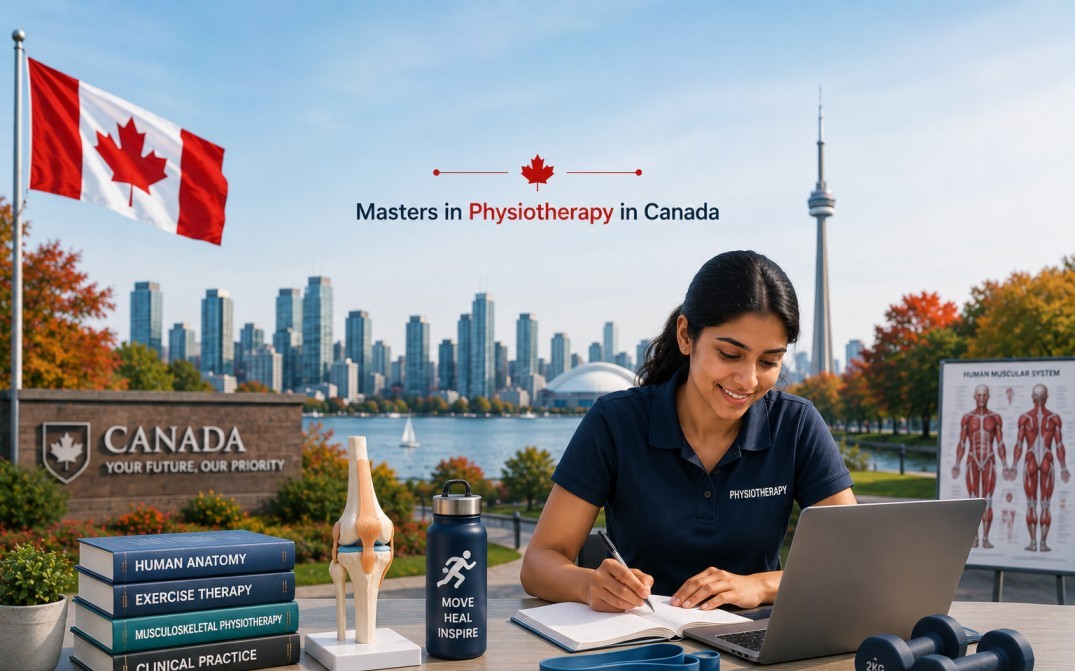
A Master’s in Physiotherapy in Canada is a 2-year professional entry-to-practice degree. It prepares graduates to become eligible for physiotherapy licensure in Canada. Tuition fees generally range from CAD 10,000-55,000 (≈ INR 7 L-37 L) per year.
Masters in Physiotherapy in Canada are offered as MScPT, MPT, or MSc Applied Physical Therapy by leading universities such as McGill University, the University of Toronto, the University of British Columbia, and others.
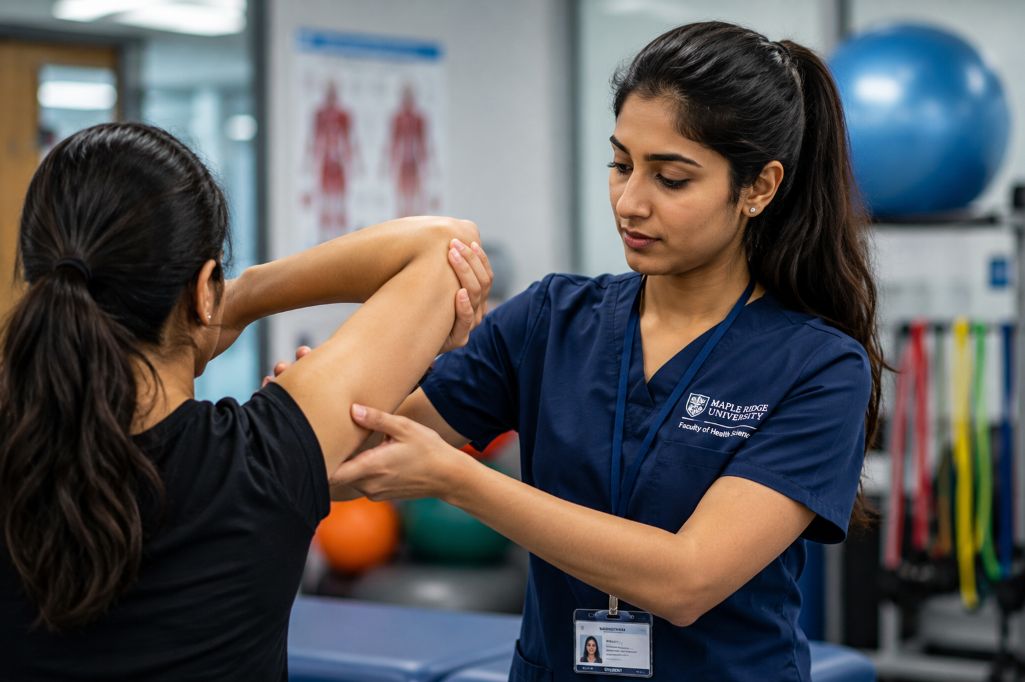
These programs combine classroom learning, evidence-based practice, movement science, and supervised clinical placements to prepare graduates for careers in rehabilitation, sports physiotherapy, neurological care, community health, and hospital-based practice.
The table below gives a quick overview of the program:
Parameter | Details |
Top Universities | McGill, Toronto, UBC, Alberta, McMaster |
Duration | 24-30 months |
Tuition Fees | CAD 10,000-55,000/year (≈ INR 7 L-37 L) |
Living Cost | CAD 1,500-2,500/month (≈ INR 1 L-2 L) |
Study Permit Funds | CAD 22,895/year (≈ INR 15 L) |
English Requirement | IELTS 6.5-7.0+ / TOEFL 90-100+ |
Work While Studying | Up to 24 hours/week off campus |
PGWP | Master’s graduates may get up to 3 years |
Salary Range | CAD 74,000-97,000/year (≈ INR 50 L-65 L) |
Why Study Masters in Physiotherapy in Canada?
Masters in Physiotherapy is a good choice if you want a healthcare career with strong clinical exposure and global recognition.
Canadian universities focus on patient-centred care, evidence-based practice, supervised placements, and interprofessional learning.
Graduates can work in hospitals, rehabilitation centres, private clinics, sports clinics, long-term care, and community health settings.
Key reasons to choose Canada include:
Strong healthcare and rehabilitation ecosystem.
Globally ranked universities.
Mandatory clinical education.
Good demand for physiotherapists.
Clear licensing pathway after graduation.
3-year PGWP and PR-friendly study route for eligible students.
Top Universities for Masters in Physiotherapy in Canada
The best universities in Canada for Masters in Physiotherapy include leading public universities recognised for their health sciences, rehabilitation research, clinical education, and evidence-based training.
Students should compare university rankings, curriculum, clinical training opportunities, tuition fees, and licensing pathways before applying.
The table below compares the top universities:
Universities for Masters in Physiotherapy in Canada | QS World University Rankings 2027 | Duration |
McGill University | 30 | Around 2 years |
University of Toronto | 32 | 24 months |
University of British Columbia | =45 | 26 months |
University of Alberta | 96 | 30 months |
McMaster University | =174 | 2 years |
Course Structure of Masters in Physiotherapy in Canada
Masters in Physiotherapy can lead to career opportunities in hospitals, rehabilitation centres, sports clinics, private practice, community health, long-term care, neurological rehabilitation, and other healthcare settings.
The table below explains the common course structure:
Component | What You Study | Purpose |
Core Courses | Anatomy, movement, clinical reasoning | Build foundation |
Practice Labs | Assessment and treatment skills | Hands-on learning |
Clinical Education | Supervised placements | Patient care exposure |
Research / Project | Evidence-based practice | Academic development |
Professional Practice | Ethics, communication, teamwork | Clinical readiness |
Core Subjects in Masters in Physiotherapy in Canada
Core subjects in Masters in Physiotherapy help students understand the human body, injury recovery, mobility, pain management, and rehabilitation planning.
These subjects prepare students to assess patients and provide safe, evidence-based treatment.
Clinical placements are a major part of Masters in Physiotherapy. Students train in hospitals, rehabilitation centres, private clinics, long-term care, sports clinics, and community settings.
Common subjects include:
Functional Anatomy
Physiology
Biomechanics
Musculoskeletal Physiotherapy
Neurological Rehabilitation
Cardiorespiratory Physiotherapy
Exercise Prescription
Pain Science
Clinical Reasoning
Evidence-Based Practice
Professional Ethics
Health Communication
Eligibility Requirements for Masters in Physiotherapy in Canada
To apply for Masters in Physiotherapy, students generally need a recognised bachelor’s degree, strong academic record, prerequisite subjects, English proficiency, and evidence of clinical exposure or volunteer experience.
Some programs require a four-year undergraduate degree and specific prerequisite courses such as anatomy, physiology, psychology, statistics, biomechanics, and human movement.
The table below summarises the common requirements:
Requirement | Common Expectation |
Bachelor’s Degree | 4-year undergraduate degree |
Preferred Background | Health science, kinesiology, life science |
GPA | Strong academic record / B+ preferred |
Prerequisites | Anatomy, physiology, statistics |
English Test | IELTS / TOEFL / PTE |
Clinical Exposure | Helpful for application |
Documents | SOP, CV, LORs, transcripts |
Academic Requirements for Masters in Physiotherapy in Canada
Academic requirements for Masters in Physiotherapy vary by university. Most universities assess your undergraduate grades, prerequisite courses, healthcare awareness, and readiness for clinical learning.
Students from physiotherapy, kinesiology, health sciences, biology, sports science, or related backgrounds may apply if they meet the course requirements.
The table below explains the academic criteria:
Requirement | Details |
Degree | Recognised bachelor’s degree |
Subject Background | Health, life sciences, kinesiology, rehab |
Prerequisites | Anatomy, physiology, psychology, statistics |
GPA | Competitive score required |
Experience | Volunteer or clinical exposure preferred |
English Language Requirements for Masters in Physiotherapy in Canada
Students applying for Masters in Physiotherapy need to meet English language requirements if their previous education was not completed in English. Most universities accept IELTS Academic or TOEFL iBT.
The table below shows common score expectations:
Test | Common Requirement |
IELTS Academic | 6.5-7.0+ |
TOEFL iBT | 90-100+ |
PTE Academic | 60-70+ |
Duolingo | Accepted by selected universities |
Cost of Studying Masters in Physiotherapy in Canada
The cost of Masters in Physiotherapy in Canada depends on university, province, residency category, and whether the program is entry-to-practice or research-based.
Students should plan tuition, living costs, study permit funds, health insurance, books, transport, and clinical placement costs.
The table below gives an estimated Cost of Studying budget:
Expense Type | CAD Cost | INR Equivalent |
Tuition Fees | CAD 10,500-55,000/year | ≈ INR 7 L-37 L |
Living Cost | CAD 18,000-30,000/year | ≈ INR 12 L-20 L |
Study Permit Funds | CAD 22,895/year | ≈ INR 15 L |
Books and Supplies | CAD 500-1,500/year | ≈ INR 34,000-1 L |
Tuition Fees for Masters in Physiotherapy in Canada
Tuition fees for Masters in Physiotherapy vary by university. Some official pages provide program-specific fees directly, while others ask students to use fee calculators or graduate tuition tables.
The table below shows tuition references:
University | Tuition Fee |
University of Toronto MScPT | CAD 49,920 (≈ INR 33 L) /year |
McGill MSc Applied PT | CAD 30,000-35,000/year (≈ INR 20 L-23 L) |
UBC MPT | CAD 35,000-37,000 total (≈ INR 23 L-25 L) |
University of Alberta MScPT | CAD 23,800 (≈ INR 16 L) |
McMaster MSc Physiotherapy | CAD 27,000-30,000 total (≈ INR 18 L-20 L) |
Cost of Living for Physiotherapy Students in Canada
Living costs depend on the city. Toronto and Vancouver are usually expensive, while Edmonton, Calgary, Hamilton, and some smaller cities may be more manageable. Physiotherapy students should also budget for transport to clinical placement sites.
The table below gives an estimated monthly budget:
Expense | Monthly Cost | INR Equivalent |
Rent | CAD 700-2,000 | ≈ INR 47,000-1 L |
Food and Groceries | CAD 300-500 | ≈ INR 20,000-34,000 |
Transport | CAD 100-180 | ≈ INR 7,000-12,000 |
Utilities and Internet | CAD 150-250 | ≈ INR 10,000-17,000 |
Personal Expenses | CAD 200-400 | ≈ INR 13,000-27,000 |
Scholarships for Masters in Physiotherapy in Canada
Scholarships for Masters in Physiotherapy may come from universities, provincial scholarship programs, and research-based awards.
Some awards are for master’s students, while others apply to doctoral or research pathways in health sciences.
The table below lists common scholarship options:
Scholarship | Value | Notes |
Ontario Graduate Scholarship | Up to CAD 15,000 (≈ INR 10 L )/year | Ontario universities |
Waterloo IME | CAD 2,500 (≈ INR 2 L) /term | Research-based master’s |
University Awards | Varies | Merit-based |
Faculty Scholarships | Varies | Health science departments |
Vanier CGS | CAD 50,000 (≈ INR 34 L) /year | Doctoral-level only |
Intakes for Masters in Physiotherapy in Canada
Canadian universities offer multiple intakes for Masters programs in Physiotherapy and related Rehabilitation disciplines, usually has a Fall Intake.
Some universities may have only one intake each year because clinical placements and cohort-based learning need careful scheduling.
The table below explains common intake timelines:
Intake | Availability | Application Planning |
Fall Intake | September, most common | Apply 8-12 months early |
Winter Intake | January, Limited | Available for some related programs |
Summer Intake | May, Rare | Mostly research or rehab science routes |
Admission Process for Masters in Physiotherapy in Canada
Applying to a Masters in Physiotherapy in Canada is competitive and timeline‑sensitive.
Plan early, align prerequisites (anatomy/physiology/biomechanics), and prepare strong proof of clinical exposure (volunteering, assistant hours, shadowing) to stand out.
Admission process:
Shortlist universities and check accreditation.
Review prerequisite subjects and GPA requirements.
Prepare IELTS/TOEFL if required.
Collect clinical, volunteer, or shadowing proof.
Arrange transcripts, SOP, CV, and references.
Apply through the university portal.
Attend interview or assessment if required.
Receive admission offer.
Arrange funds and apply for study permit.
Prepare for immunisation, police checks, and clinical placement requirements.
Student Visa Requirements for Masters in Physiotherapy in Canada
Students need a Canadian study permit to study Masters in Physiotherapy in Canada.
Students must have a letter of acceptance from a Designated Learning Institution, proof of funds, identity documents, academic records, and other documents requested by IRCC.
The table below summarises the main study permit requirements:
Requirement | Details |
Letter of Acceptance | From a DLI |
Proof of Funds | Tuition + CAD 22,895 (≈ INR 15 L) living funds |
PAL/TAL | Exempt for eligible public master’s students |
Passport | Valid passport |
English Scores | As required by university |
Medical Exam | May be required for healthcare programs |
Biometrics | Required for most applicants |
SOP / Study Plan | Recommended |
Note: For 2026, IRCC states that master’s and doctoral students enrolled at public DLIs are exempt from the PAL/TAL requirement.
Career Opportunities After Masters in Physiotherapy in Canada
Masters in Physiotherapy can lead to career opportunities in hospitals, rehabilitation centres, sports clinics, private practice, community health, long-term care, neurological rehabilitation, and other healthcare settings.
Since physiotherapy is regulated in Canada, so graduates must complete licensing requirements before independent practice.
CAPR states that successfully completing the Canadian Physiotherapy Examination is required to become a licensed physiotherapist in Canada. CAPR also explains that credentialling reviews whether internationally trained applicants’ credentials are comparable to Canadian-educated physiotherapists.
The table below shows common roles and salary estimates:
Job Role | Annual Salary | INR Equivalent |
Physiotherapist | CAD 74,000-97,000 | ≈ INR 50 L-65 L |
Sports Physiotherapist | CAD 70,000-100,000 | ≈ INR 47 L-67 L |
Rehabilitation Specialist | CAD 60,000-85,000 | ≈ INR 40 L-57 L |
Pediatric Physiotherapist | CAD 65,000-95,000 | ≈ INR 44 L-64 L |
Neurological Rehab Specialist | CAD 60,000-90,000 | ≈ INR 40 L-60 L |
Source: Glassdoor
Final Thoughts from Author
Masters in Physiotherapy in Canada is a strong choice if you want a healthcare career that combines science, patient care, and practical clinical training.
But do Check accreditation, clinical placement structure, tuition, city cost, licensing route, and PGWP eligibility.
Physiotherapy admissions are competitive, so start early and build a strong profile with prerequisite subjects, volunteering, and clear career goals.
Planning to study Masters in Physiotherapy in Canada? Connect with our experts for personalised guidance on admissions, universities, scholarships, and study permits.
Other Masters in Canada from Top Universities:
Masters in Public Health in Canada
Masters in Clinical Psychology Canada
Masters in Public Health in Canada
Masters in Computer Science in Canada