
MS in Data Science in Canada
Table of Contents
- Best Universities for MS in Data Science in Canada
- Course Structure of MS in Data Science in Canada
- Eligibility Requirements for MS in Data Science in Canada
- Cost of Studying MS in Data Science in Canada
- Scholarships for MS in Data Science in Canada
- Intakes for MS in Data Science in Canada
- Admission Process for MS in Data Science in Canada
- Student Visa Requirements for MS in Data Science in Canada
- Career Opportunities After MS in Data Science in Canada
- Final Thoughts from Author
An MS in Data Science in Canada is typically a 10 to 24 month accelerated or professional program emphasizing applied machine learning and statistics.
Standard Admission requires a recognised bachelor's degree in a quantitative field, proof of English language proficiency (such as IELTS), and other program-specific requirements.
The program prepares students for careers in data science, artificial intelligence, machine learning, data engineering, business analytics, and cloud analytics through hands-on learning in programming, statistics, databases, and real-world projects.
The table below gives a quick overview of MS in Data Science in Canada:
Parameter | Details |
Top-ranked Canadian universities | University of Toronto - #13 University of British Columbia - =34 University of Waterloo - #40 |
Duration | 10-24 months |
Tuition Fees | CAD 25,000-95,000 (≈ INR 17 L-64 L) |
Living Cost | CAD 1,500-2,500/month (≈ INR 1 L-2 L) |
Study Permit Funds | CAD 22,895/year (≈ INR 15 L) |
Work While Studying | Up to 24 hours/week |
PGWP | Eligible master’s graduates may qualify for up to 3 years |
Popular Roles | Data Scientist, ML Engineer, Data Engineer |
Salary Range | CAD 75,000-140,000/year (≈ INR 50 L-94 L) |
Best Universities for MS in Data Science in Canada
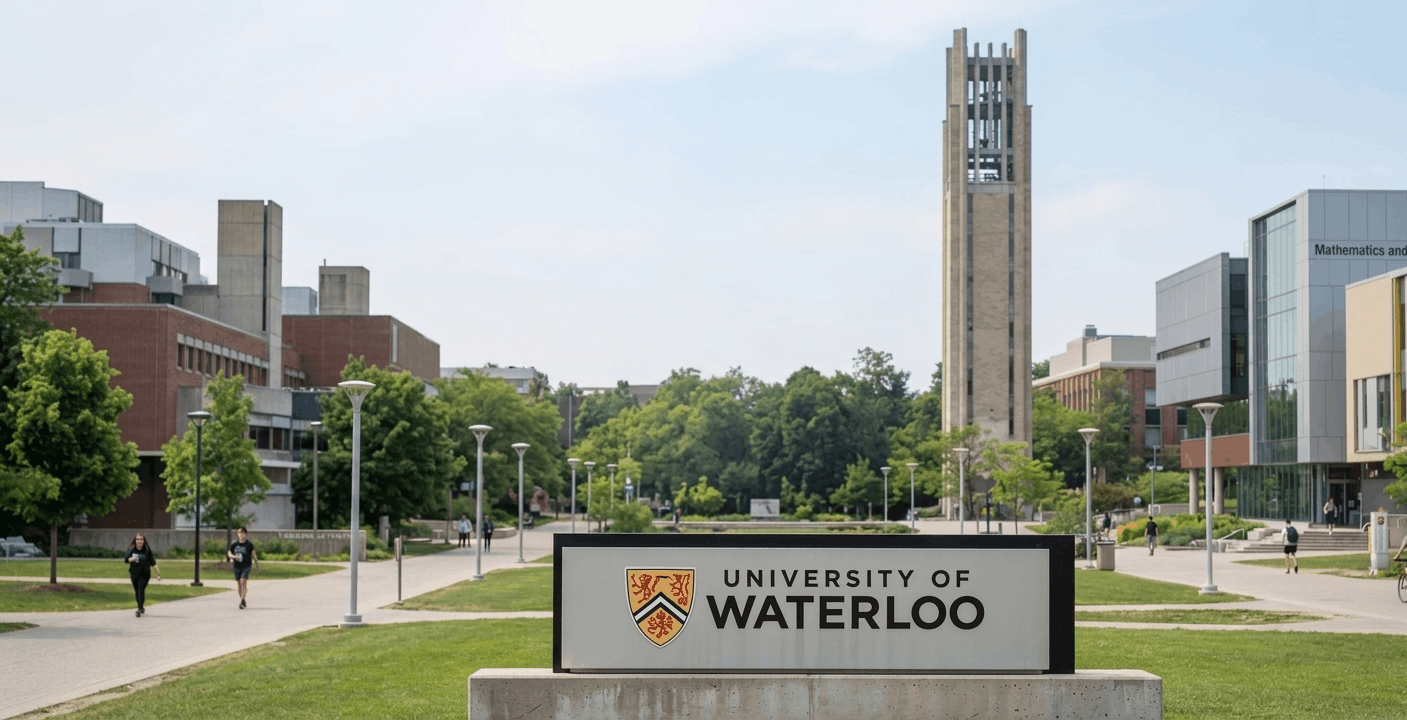
The best universities in Canada for MS in Data Science include institutions with strong computer science, AI, statistics, analytics, and applied computing departments such as University of Toronto, University of British Columbia and University of Waterloo.
The table below highlights top-ranked Canadian universities for MS in Data Science:
Best Universities in Canada for MS in Data Science
| QS World University Rankings by Subject 2026: Data Science and Artificial Intelligence
| Tuition Fees (Approx.) |
University of Toronto | 13 | CAD 65,000-95,000 (≈ INR 44 L-64 L) |
University of British Columbia | =34 | CAD 50,000-56,000 (≈ INR 34 L-38 L) |
University of Waterloo | 40 | CAD 35,000-55,000 (≈ INR 23 L-37 L) |
McGill University | 41 | CAD 45,000-65,000 (≈ INR 30 L-44 L) |
Université de Montréal | 51-100 | CAD 25,000-45,000 (≈ INR 17 L-30 L) |
Simon Fraser University | 101-200 | CAD 30,000-45,000 (≈ INR 20 L-30 L) |
University of Alberta | 101-200 | CAD 25,000-40,000 (≈ INR 17 L-27 L) |
Note: Tuition varies by program, number of terms, internship/co-op structure, and international fee category. Always check the latest official university fee page before applying.
Course Structure of MS in Data Science in Canada
MS in Data Science is designed to build both technical and applied skills. Students learn programming, statistics, databases, machine learning, big data tools, cloud computing, data visualisation, and business communication.
Many programs include a capstone, internship, co-op, or research project.
The table below explains the common structure of MS in Canada Data Science:
Component | What You Study | Purpose |
Foundation Modules | Python, R, statistics | Build technical base |
Core Modules | ML, data mining, big data | Build data science skills |
Electives | AI, NLP, cloud, health analytics | Choose specialisation |
Capstone / Project | Real dataset or client problem | Practical exposure |
Co-op / Internship | Work-integrated learning | Canadian experience |
Core Subjects in MS in Data Science in Canada
Core subjects help students understand how to collect, clean, analyse, model, and explain data.
These modules are important because employers expect graduates to be comfortable with both coding and analytical thinking.
The list below highlights common subjects covered in MS in Data Science:
Machine Learning - Supervised learning, unsupervised learning, model training, and model evaluation.
Statistical Modelling - Regression, probability, inference, forecasting, and hypothesis testing.
Big Data Technologies - Hadoop, Spark, cloud tools, and scalable data processing.
Programming for Data Science - Python, R, SQL, and applied coding.
Data Mining - Pattern detection, clustering, classification, and predictive modelling.
Data Visualisation - Tableau, Power BI, dashboards, and storytelling.
Database Systems - SQL, NoSQL, data warehousing, and data pipelines.
Ethics and Privacy - Responsible AI, bias, governance, and privacy rules.
Popular Specializations in MS in Data Science in Canada
Students choosing MS in Data Science from Canada can specialise based on their career goals. Some students prefer AI and machine learning, while others choose analytics, cloud, finance, healthcare, or data engineering.
Choose a specialisation only after checking the curriculum and job outcomes. Some popular specialisations include:
Artificial Intelligence and Machine Learning - Best for AI engineer, ML engineer, and applied research roles.
Big Data Analytics - Suitable for cloud platforms, distributed systems, and large-scale data processing.
Business Analytics - Focuses on dashboards, forecasting, business intelligence, and decision-making.
Healthcare Data Analytics - Useful for healthtech, hospitals, public health, and pharma analytics.
Financial Data Science - Covers risk modelling, fraud analytics, fintech, and investment data.
Natural Language Processing - Useful for text analytics, chatbots, search, and generative AI.
Data Engineering - Focuses on data pipelines, databases, infrastructure, and production systems.
Eligibility Requirements for MS in Data Science in Canada
To apply for MS in Data Science, students generally need a bachelor’s degree in a quantitative field, strong grades, technical preparation, and English proficiency.
Universities may also check prerequisite knowledge in statistics, calculus, linear algebra, databases, programming, and algorithms.
Academic requirements differ by university, but most programs prefer students from computer science, mathematics, statistics, engineering, economics, analytics, or related quantitative fields.
The table below summarises the general eligibility and academic requirements for MS in Data Science:
Requirement | Details |
Bachelor’s Degree | 4-year degree preferred |
Preferred Background | CS, math, statistics, engineering |
Minimum GPA | Around 3.0/4.0 or B average |
Prerequisites | Calculus, statistics, programming |
Preferred Background | CS, math, statistics, engineering |
Technical Skills | Python/R, SQL, algorithms |
GRE/GMAT | Usually not mandatory, may help |
Work Experience | Useful, not always compulsory |
English Test | IELTS / TOEFL / PTE |
Documents | SOP, CV, LORs, transcripts |
English Language Requirements for MS in Data Science in Canada
Students must submit English language scores unless they qualify for a waiver. Score requirements vary by university, but graduate-level data science programs usually expect strong academic writing, presentation, and communication skills.
The table below shows common English language requirements:
Test | Common Requirement |
IELTS Academic | 6.5-7.0 |
TOEFL iBT | 86-100 |
PTE Academic | 60-68 |
Duolingo | 115-125, if accepted |
Additional Admission Requirements for MS in Data Science in Canada
Apart from grades and test scores, universities assess your motivation, technical readiness, projects, and fit for the program.
A strong SOP should explain why you want to study data science, what skills you already have, and how the program supports your career plan.
The table below highlights additional documents usually required for admission:
Document | Purpose |
SOP / Personal Statement | Explains goals and program fit |
Resume / CV | Shows skills and experience |
LORs | Academic or professional references |
Portfolio / Projects | Useful for coding and ML proof |
Transcripts | Confirms subjects and grades |
Interview | Required by selected programs |
Cost of Studying MS in Data Science in Canada
The MS in Data Science in Canada Fees and cost of studying includes tuition fees, living expenses, health insurance, books, application fees, and study permit funds.
The total budget depends on university, city, program length, and whether the course includes co-op or internship.
The table below gives a practical estimate of MS in Data Science:
Cost Type | CAD Amount | INR Equivalent |
Tuition Fees | CAD 25,000-95,000 | ≈ INR 17 L-64 L |
Living Cost / Year | CAD 18,000-30,000 | ≈ INR 12 L-20 L |
Study Permit Funds | CAD 22,895/year | ≈ INR 15 L |
Application Fees | CAD 100-250 | ≈ INR 7,000-17,000 |
Books and Supplies | CAD 800-2,000 | ≈ INR 54,000-1 L |
Tuition Fees for MS in Data Science in Canada
MS in Data Science in Canada Fees differ across professional, research-based, and co-op programs.
Professional programs are often more expensive because they are intensive and may include career support, applied projects, or industry-linked learning.
The table below compares tuition fee ranges for different types of data science master’s programs:
Program Type | Tuition Fees | INR Equivalent |
Professional / Accelerated MDS | CAD 45,000-95,000 | ≈ INR 30 L-64 L |
Public University MSc / MASc | CAD 25,000-55,000 | ≈ INR 17 L-37 L |
Research-Based Programs | CAD 20,000-45,000 | ≈ INR 13 L-30 L |
Cost of Living for MS in Data Science in Canada
Besides MS in Data Science in Canada Fees, living costs depend on city, accommodation, lifestyle, and whether you stay on campus or off campus.
Toronto and Vancouver are usually more expensive, while Edmonton, Calgary, Waterloo, and Hamilton may be more manageable for students.
The table below shows estimated monthly living costs for data science students in Canada:
Expense | Monthly Cost | INR Equivalent |
Rent | CAD 800-1,800 | ≈ INR 54,000-1 L |
Food and Groceries | CAD 300-500 | ≈ INR 20,000-34,000 |
Transport | CAD 100-180 | ≈ INR 7,000-12,000 |
Utilities and Internet | CAD 150-250 | ≈ INR 10,000-17,000 |
Personal Expenses | CAD 200-400 | ≈ INR 13,000-27,000 |
Scholarships for MS in Data Science in Canada
Scholarships for MS in Data Science are offered by universities, provincial bodies, research institutes, and AI-focused funding organisations.
Funding is competitive and may depend on academic merit, research potential, leadership, supervisor nomination, or admission strength.
The table below highlights common scholarship options for students planning MS in Data Science:
Scholarship / Funding | Value | Best For |
Vector Scholarship in AI | CAD 17,500 (≈ INR 12 L) | AI-focused master’s students |
Ontario Graduate Scholarship | Up to CAD 15,000/year (≈ INR 10 L) | Ontario master’s students |
University Entrance Awards | Usually CAD 2,000-20,000 (≈ INR 1 L-13 L) | Strong applicants |
Graduate Research Assistantships | CAD 10,000-30,000/year (≈ INR 7 L-20 L) | Research-based students |
International Student Awards | CAD 12,500 (≈ INR 8 L) | International applicants |
Intakes for MS in Data Science in Canada
Most universities offer MS in Data Science in the Fall Intake, which usually starts in September.
Some programs may offer Winter Intake, but seats are fewer. Application deadlines often close months before classes begin, so early planning is important.
The table below shows common intake timelines for MS in Canada Data Science programs:
Intake | Classes Begin | Common Application Period |
Fall Intake | September | December-March |
Winter Intake | January | June-September |
Summer Intake | May | Limited availability |
Note: Fall Intake is usually preferred because it offers more program choices, better scholarship chances, and more time for internship planning.
Admission Process for MS in Data Science in Canada
The admission process for MS in Data Science is profile-based. Universities check your academic record, technical preparation, programming skills, SOP, references, and English scores.
Some programs may also look at projects, research experience, or relevant work experience.
The table below explains the step-by-step admission process:
Step | Process |
1. | Shortlist universities and program type |
2. | Check tuition, deadlines, and prerequisites |
3. | Prepare IELTS/TOEFL/PTE score |
4. | Build data science project portfolio |
5. | Prepare SOP, CV, and LORs |
6. | Submit online application |
7. | Attend interview if required |
8. | Receive offer letter |
9. | Arrange funds and study permit documents |
10. | Apply for Canada study permit |
Student Visa Requirements for MS in Data Science in Canada
To study MS in Data Science, students need a study permit after receiving admission from a Designated Learning Institution.
Students must show proof of acceptance, proof of funds, identity documents, and other documents based on your profile.
The table below summarises key study permit requirements:
Requirement | Details |
Letter of Acceptance | From a DLI |
Proof of Funds | Tuition + CAD ≈ 22,900 /year |
Passport | Valid passport |
PAL/TAL | Check latest exemption/status |
Medical Exam | If required |
Biometrics | Required for most applicants |
SOP / Study Plan | Strongly recommended |
Note:
Eligible students can work up to 24 hours/week during regular terms and full-time during scheduled breaks.
Eligible master’s graduates may qualify for a 3-year PGWP, subject to IRCC rules and program eligibility.
Career Opportunities After MS in Data Science in Canada
MS in Data Science can lead to roles in technology, finance, healthcare, retail, consulting, logistics, government, and AI research.
Students with strong Python, SQL, cloud, machine learning, and communication skills usually have better job outcomes.
The table below highlights common roles and salary ranges after MS in Data Science:
Job Role | Salary Range | INR Equivalent |
Data Scientist | CAD 80,000-125,000/year | ≈ INR 54 L-84 L |
Machine Learning Engineer | CAD 90,000-135,000/year | ≈ INR 60 L-91 L |
Data Engineer | CAD 85,000-130,000/year | ≈ INR 57 L-87 L |
BI Analyst | CAD 70,000-100,000/year | ≈ INR 47 L-67 L |
AI Specialist | CAD 90,000-140,000/year | ≈ INR 60 L-94 L |
Source: Glassdoor
Note: Salary varies by city, company, experience, programming skills, and industry.
Final Thoughts from Author
MS in Data Science in Canada is a good choice if you want a technical master’s degree with career scope in AI, analytics, cloud, finance, healthcare, and technology.
But do not choose a university only by ranking. Compare curriculum, fees, internship or co-op options, city cost, scholarship chances, and PGWP eligibility.
Build a strong project portfolio before applying because admissions and jobs are competitive.
Planning to study MS in Data Science in Canada? Book a free 1:1 counselling session with our study abroad experts for personalised guidance.
Also Read: Study Master's in Top Cities in Canada