
Masters in AI in Canada 2026
Table of Contents
- Top Universities for Masters in AI in Canada
- Course Structure for Masters in AI Canada
- Eligibility Requirements for Masters in AI Canada
- Cost of Studying for Masters in AI in Canada
- Application Process and Deadline for Masters in AI in Canada
- Job Opportunities After Masters in AI in Canada
- Conclusion
Pursuing a Masters in Artificial Intelligence in Canada gives students access to advanced education, practical co-op opportunities, and strong career prospects in the growing AI industry. Universities focus on areas like machine learning, robotics, deep learning, and data science with industry-oriented training.
Most masters in AI Canada programs take 1 to 2 years to complete. Tuition fees generally range between CAD 15,000 and CAD 55,000+ (₹9.2L – ₹33.7L) depending on the university, specialization, and program structure chosen by international students.
Key highlights:
Aspect | Details |
Program Types | MSc in Artificial Intelligence, Master of AI, MSc Computer Science (AI Specialization) |
Duration | 1 – 2 Years |
Average Tuition Fees | CAD 15,000 and CAD 55,000+ (₹9.2L – ₹33.7L) |
Top Universities | University of Toronto, University of British Columbia, McGill University, University of Alberta, University of Waterloo |
Popular Specializations | Machine Learning, Deep Learning, Robotics, Natural Language Processing, Data Science |
Intake Seasons | Mainly Fall (September), limited Winter (January) intake |
Internship / Co-op | Available in many AI programs through industry projects and research labs |
Average Salary | CAD 80,000 – 150,000 (₹49L – ₹91L) |
Career Opportunities | AI Engineer, Machine Learning Engineer, Data Scientist, Robotics Engineer, AI Research Scientist |
Top Universities for Masters in AI in Canada
Choosing the right university for masters in artificial intelligence Canada is important because each institution focuses on different strengths like research, applied AI, or industry collaboration.
Canadian universities are globally recognized for AI research labs and partnerships with leading tech companies. This gives students access to real projects, internships, and advanced research opportunities.
Top Universities Offering Masters in AI in Canada :
University | QS Rank |
University of Toronto | #11 |
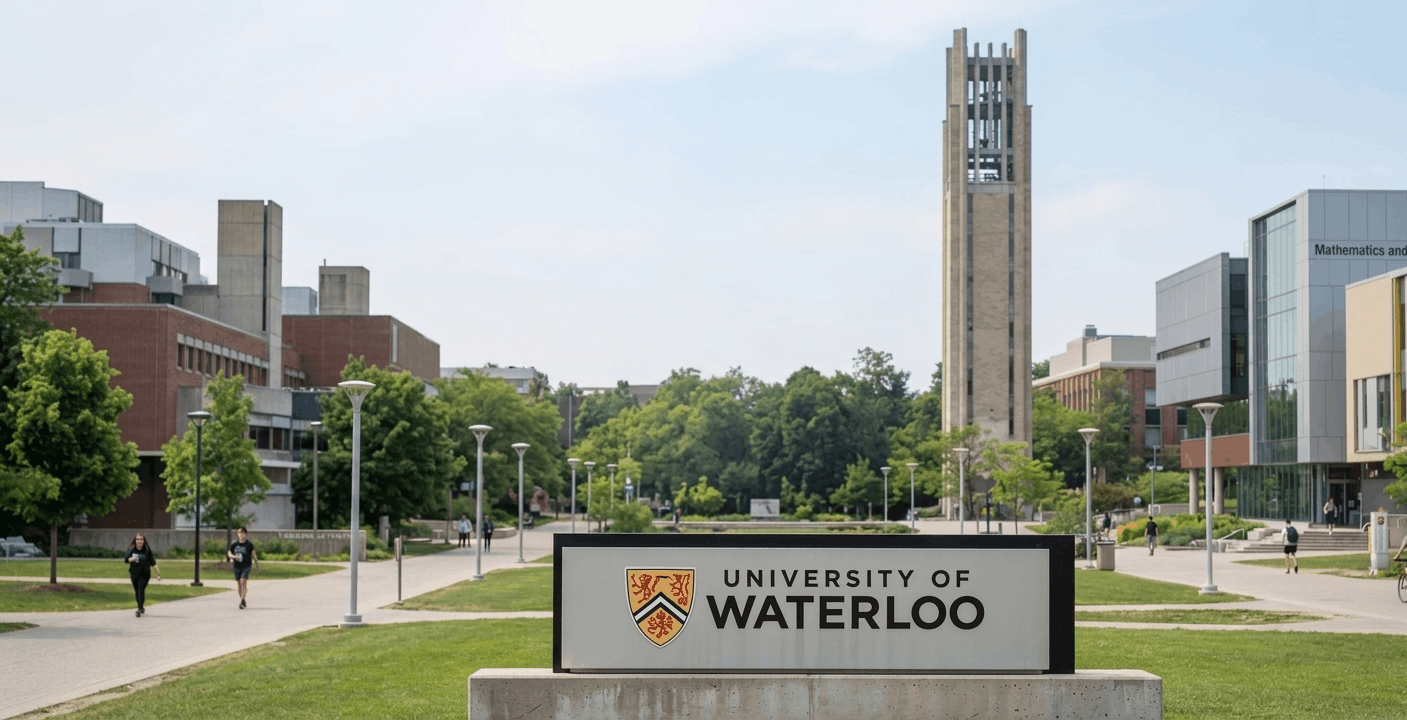
University of Waterloo | #23 |
University of British Columbia | #25 |
McGill University | #49 |
Université de Montréal | #61 |
University of Alberta | #109 |
These universities are preferred because they offer strong AI labs and industry exposure, which helps students move into high-paying tech roles.
Course Structure for Masters in AI Canada
The course structure in Masters in AI Canada is designed to combine strong technical fundamentals with practical AI applications. Universities focus heavily on machine learning, intelligent systems, and real-world problem-solving, helping students develop both research and industry-ready skills.
Most students begin with foundational subjects that strengthen programming, mathematics, and analytical thinking before moving into advanced AI specialization areas. What actually matters here is that Canadian universities emphasize hands-on learning instead of only theoretical concepts.
Foundational Core Subjects in Masters in AI Canada
The first phase of the program focuses on core AI concepts and technical foundations. Students learn topics such as machine learning, neural networks, probability, data modeling, and deep learning algorithms. Many universities also include AI ethics and responsible AI deployment because industries now expect professionals to understand privacy, bias, and ethical decision-making in AI systems.
Specialized AI Electives in Masters in AI Canada
After building technical foundations, students choose electives based on their career interests and industry goals. Popular specialization areas include computer vision, natural language processing (NLP), robotics, predictive analytics, and business intelligence. These subjects allow students to explore how AI is applied across healthcare, finance, cybersecurity, automation, and smart technologies.
Research Projects & Co-op in Masters in AI Canada
Most masters in artificial intelligence Canada programs include practical learning through research projects, internships, or capstone assignments. Students often work on real AI systems, industry case studies, or independent research under faculty guidance. Co-op opportunities also help students gain hands-on industry experience, which becomes important for securing high-paying AI roles after graduation.
Eligibility Requirements for Masters in AI Canada
Eligibility requirements for Masters in AI Canada are mainly focused on technical background, programming knowledge, and analytical skills. Since artificial intelligence is a highly specialized field, universities expect students to have strong academic preparation in mathematics, computer science, or related STEM disciplines.
Most masters in artificial intelligence Canada programs require a 4-year bachelor’s degree in Computer Science, Engineering, Mathematics, Information Technology, Data Science, or another quantitative field. Universities generally expect a minimum GPA of around 70%–75%, while top research-focused institutions may require 80% or higher for competitive admissions.
Academic Qualifications for Masters in AI Canada
Students must have completed undergraduate coursework in subjects like linear algebra, probability, statistics, and calculus. These mathematical foundations are important because AI models and machine learning systems rely heavily on data analysis and computational problem-solving.
Universities also expect applicants to demonstrate programming proficiency in languages such as Python, Java, C++, or R. Knowledge of algorithms, data structures, and software development concepts strengthens the overall application profile significantly.
English Language Requirements for Masters in AI Canada
International students must submit English language proficiency scores as part of the admission process. Most universities accept:
Test | Minimum Score Required |
IELTS | 6.5 – 7.0 |
TOEFL | 85 – 100 |
Strong communication skills become important during research work, technical documentation, and collaborative AI projects.
Additional Admission Requirements for Masters in AI Canada
Some universities may recommend GRE scores to strengthen applications, especially for competitive AI research programs. Along with academic documents, students are generally required to submit a Statement of Purpose (SOP), Letters of Recommendation (LORs), and an updated resume highlighting technical skills, academic projects, or professional experience related to AI and data science.
Cost of Studying for Masters in AI in Canada
The cost of studying Masters in AI in Canada depends mainly on the type of university and the city where you choose to study. Since AI is a high-demand specialization, tuition fees are generally higher at top research universities like Toronto, UBC, and McGill, while public and mid-tier universities offer more affordable options.
Apart from tuition fees, living expenses also play a major role in the overall budget. Cities like Toronto and Vancouver are more expensive, while smaller cities offer lower monthly costs. On average, international students should plan both tuition and living expenses together for a realistic study budget.
Tuition Fees for Masters in AI Canada By University Type :
University Type | Annual Tuition Fees |
Public Universities | CAD 15,000 – 30,000 (₹10.2L – ₹20.4L) |
Mid-Tier Research Universities | CAD 20,000 – 40,000 (₹13.6L – ₹27.2L) |
Top-Tier Universities | CAD 25,000 – 60,000 (₹17L – ₹40.8L) |
Top-tier universities charge higher fees because of advanced AI labs, research opportunities, and global industry connections, which directly improve career outcomes.
Cost of Living for Masters in AI Students in Canada :
Expense Category | Monthly / Annual Cost |
Accommodation (Shared/Student Housing) | CAD 600 – 1,200 (₹40.8K – ₹81.6K) |
Food & Groceries | CAD 250 – 400 (₹17K – ₹27.2K) |
Public Transport | CAD 80 – 150 (₹5.4K – ₹10.2K) |
Utilities & Internet | CAD 150 – 250 (₹10.2K – ₹17K) |
Health Insurance | CAD 600 – 1,000 per year (₹40.8K – ₹68K) |
On average, students spend around CAD 12,000 – 18,000 per year (₹8.1L – ₹12.2L) on living expenses. This varies depending on lifestyle, city, and accommodation choice, making budgeting an important part of planning for masters in artificial intelligence Canada.
Application Process and Deadline for Masters in AI in Canada
The application process for Masters in AI in Canada is structured but highly competitive, especially for top universities. Students need to prepare academic documents, proof of technical skills, and standardized test scores well in advance. Since AI programs are in high demand, early preparation plays a major role in improving admission chances.
Most universities follow a structured online application system where students submit their academic records, SOP, and recommendation letters. What actually matters here is how well a candidate showcases programming ability, mathematical strength, and clarity of career goals in artificial intelligence.
Application Process for Masters in AI in Canada
Applying for a Master’s in Artificial Intelligence in Canada involves multiple stages. Here’s a clear breakdown of the process:
1. Shortlist Universities and Programs
Begin by researching universities based on:
AI specialization areas
Research opportunities
Faculty expertise
Tuition fees
Eligibility criteria
Internship and co-op options
Choose programs that align with your academic background and career goals.
2. Prepare Required Documents
Most Canadian universities require the following documents:
Academic transcripts
Statement of Purpose (SOP)
Letters of Recommendation (LORs)
Updated resume/CV
Passport copy
Proof of technical skills or project experience
Ensure all documents are properly formatted and submitted before deadlines.
3. Submit English Proficiency Scores
International students must provide English language test scores such as:
IELTS
TOEFL
PTE (accepted by some universities)
Minimum score requirements vary by institution.
4. Submit GRE Scores (If Required)
Some competitive AI programs may request GRE scores, especially research-focused universities. Although optional in many institutions, strong scores can strengthen your application.
5. Complete the Online Application
Fill out the university application portal carefully and upload all required documents. Pay the application fee before final submission.
6. Attend Interviews or Assessments
Certain universities may conduct:
Online interviews
Technical assessments
Research discussions
These are usually for highly competitive or thesis-based AI programs.
7. Receive Admission Decision
After evaluation, universities release:
Admission offers
Conditional offers
Rejection notifications
Selected students can then proceed with tuition deposit payments and study permit applications.
Admission Deadlines for Masters in AI in Canada
Admission timelines vary by university and intake season. However, most Canadian universities primarily offer admissions during the Fall intake.
Fall Intake (September)
Most popular and competitive intake
Wide range of AI specializations available
Application deadlines generally fall between December and February
Winter Intake (January)
Limited program availability compared to Fall
Deadlines usually close between August and October of the previous year
Why Early Application Matters
AI programs in Canada receive a high number of international applications each year. Applying early helps students:
Secure seats in competitive programs
Improve scholarship opportunities
Allow sufficient time for visa processing and accommodation arrangements
It is advisable to start preparing applications at least 8–12 months before the intended intake.
Job Opportunities After Masters in AI in Canada
Career opportunities after masters in artificial intelligence Canada are extremely strong due to growing demand for AI professionals worldwide.
Students can work in tech companies, research labs, healthcare systems, financial institutions, and robotics companies. AI skills are now used in almost every industry.
Popular Job Roles & Salaries
Job Role | Corrected Salary Range (CAD) | INR Equivalent |
AI Engineer | CAD 90,000 – 125,000 | ₹55L – ₹76L |
Machine Learning Engineer | CAD 95,000 – 160,000 | ₹58L – ₹97L |
Data Scientist | CAD 80,000 – 125,000 | ₹49L – ₹76L |
Robotics Engineer | CAD 80,000 – 115,000 | ₹49L – ₹70L |
AI Research Scientist | CAD 120,000 – 200,000+ | ₹73L – ₹1.2Cr+ |
Source : Glass door
Conclusion
Masters in AI in Canada is a strong option for students aiming to build a career in machine learning, data science, and advanced technology roles. The program combines solid theoretical foundations with practical learning, helping students develop real-world problem-solving skills in artificial intelligence.
With globally ranked universities, research-driven education, and strong job opportunities, Canada offers excellent long-term value for AI graduates. For students targeting high-growth tech careers, masters in artificial intelligence Canada provides both global exposure and strong earning potential in the AI industry.